
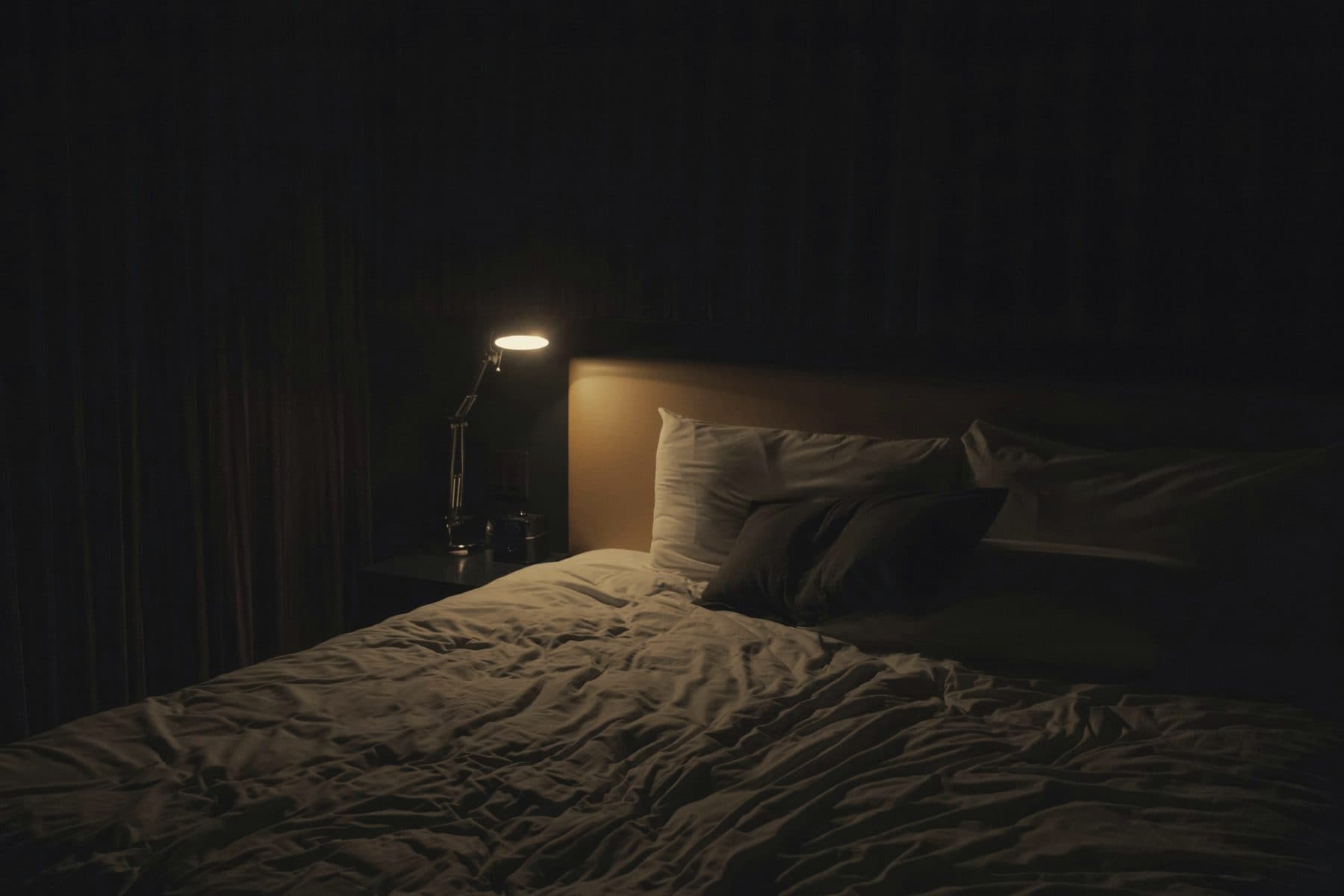
Sleep: the foundation of all your goals
Fixed hours, morning light, a cool bedroom: start with the simple settings.
The essentials
7 to 9 hours a night, with a consistent bedtime and wake time (± 30 minutes).
A cool (17-19°C), dark, quiet bedroom.
Screens off 60 minutes before bed, or at minimum in night mode with low brightness.
Caffeine: last cup about 8 hours before bed (around 2 p.m. for a 10 p.m. bedtime). Alcohol: never as a sleep aid.
These benchmarks also feed your personalized plan. Build my plan
Based on your goal
Choose your goal: here is what matters most for it.
Weight loss
- Evening cravings are often fatigue in disguise: an earlier bedtime cuts out late-night snacking.
Performance
- Most of your natural growth hormone is released during deep sleep: recovery happens at night.
Focus & cognition
- Memory consolidation happens during sleep: learning without sleeping is like filling a bucket with a hole in it.
Energy
- Before chasing more energy during the day, secure your night: it's the source, everything else is borrowed.
Longevity
- Sleep regularity predicts long-term health better than duration alone.
Skin & appearance
- Skin cell renewal peaks during deep sleep: "beauty sleep" isn't just a figure of speech.
Stress & calm
- Lack of sleep amplifies amygdala reactivity: everything feels more stressful after a bad night.
Libido & intimacy
- Testosterone is mostly released at night: a week of 5-hour sleep can drop it by 10-15%.
Recomposition & muscle gain
- Most natural growth hormone is released in deep sleep: the building happens at night, the workout only triggers it.
In detail
Rhythm before duration
Go to bed and get up at fixed times, even on weekends (within an hour), and step outside for ten minutes after waking: morning light helps set your internal clock. In the evening, dim the lights after dinner.
The usual saboteurs
Caffeine has a half-life of 5 to 6 hours: a coffee at 4 p.m. is still half active at 10 p.m. Alcohol helps you fall asleep, but it fragments the second half of the night and delays and reduces REM sleep.
A heavy late meal, an intense workout after 9 p.m. and phone use in bed also delay falling asleep.
The ideal bedroom, in four settings
Cool (17 to 19 °C), dark (use a sleep mask if needed), quiet (earplugs or white noise) and reserved for sleep: no work, no meals, no scrolling in bed.
Evening routine and nighttime waking
Repeat the same sequence every evening (dim lights, hot shower, paper book, slow breathing): it becomes a cue for sleep.
If you wake in the night, don't look at the clock; after 20 to 30 minutes awake, get up, read in soft light and go back to bed when drowsiness returns.
Nap: 20 minutes, before 3 p.m. Loud snoring, breathing pauses noticed by someone close to you, or an irresistible urge to sleep despite full nights: talk to a doctor.
Common mistakes
- Catching up on sleep by staying in bed until noon on weekends: the jet lag just starts over every Monday.
- Using alcohol or daily melatonin as a sleep aid.
- Reaching for a sleep supplement before fixing light exposure, caffeine, and consistency.