
Retatrutide
Triple agonist of the GLP-1, GIP, and glucagon receptors
Up to 28.7% of body weight on average in the TRIUMPH-4 phase 3 trial: for a 250 lb person, that is more than 70 lb.
One molecule, three receptors: GLP-1 and GIP for appetite and satiety, glucagon for energy expenditure. In phase 2, the weight curve was still falling at the last measurement.
It is also studied for liver fat: up to 82% less, measured by MRI, and back to normal in up to 86% of participants (Nature Medicine, 2024).
- Half-life
- About six days: a fatty-acid chain binds it to albumin, which protects it from breakdown and keeps its concentration stable.
- Route
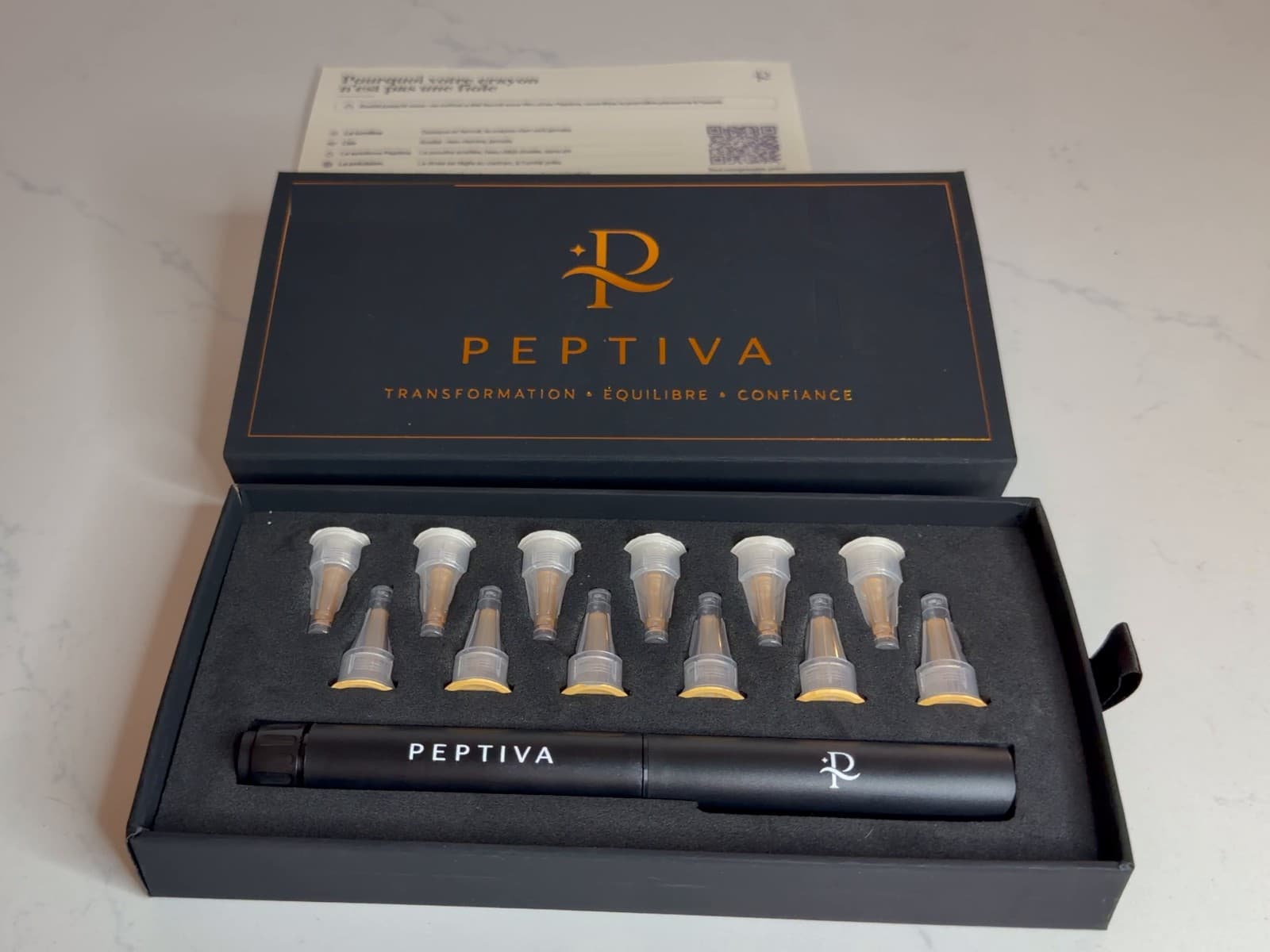
- Subcutaneous injection, on the schedule of the protocol included with the product.
Technical sheet
- Family
- Triple agonist of the GLP-1, GIP, and glucagon receptors
- Half-life
- About six days: a fatty-acid chain binds it to albumin, which protects it from breakdown and keeps its concentration stable.
- Route
- Subcutaneous injection, on the schedule of the protocol included with the product.
- Time to effect
- Appetite drops from the first few weeks; weight follows, over several months.
- Level of evidence
- Documented in humans
Trials raise the dose in steps, to let the digestive system adapt.
Chemical identity
- Chemical name
- LY3437943
- Form
- Acylated peptide (fatty acid chain), values for the base form
- CAS No.
- 2381089-83-2
Salt form: as stated on the lot's certificate of analysis.
Three receptors: GLP-1, GIP and glucagon
Retatrutide mimics three hormones from the gut and pancreas. GLP-1 slows stomach emptying, raises insulin when blood sugar rises, and signals fullness to the brain.
GIP reinforces the effect on insulin and appears to ease the nausea of GLP-1 alone. Glucagon raises energy expenditure and the burning of fat in the liver.
Glucagon, the third receptor
Semaglutide activates one receptor, tirzepatide two: glucagon is the third, and it increases energy expenditure and the use of liver fat. On its own, it would raise blood sugar; here, the insulin stimulated by GLP-1 and GIP offsets that effect.
Effects and realistic timelines
Appetite: users report hunger dropping within the first days
First days
Weight loss: up to 28.7% of body weight on average in TRIUMPH-4, and 25.0% in TRIUMPH-1, the largest published study (2,339 adults)
In humans: several months, as long as use and habits last
Blood sugar: a larger drop in HbA1c than with dulaglutide in phase 2 (The Lancet, 2023)
First few weeks to a few months
Liver fat: up to 82% less, measured by MRI
A few months
What you may feel
- Nausea, vomiting, diarrhea, or constipation: the most common, especially at each step-up, and they ease over time.
- Reflux, bloating, burping, linked to slower stomach emptying.
- A slightly faster resting heart rate, attributed to glucagon and monitored in the trials.
- Fatigue or lower energy during rapid weight loss.
- Loss of muscle mass if protein intake and resistance training don't keep pace.
- Gallstones, as with any rapid weight loss.
Stop and consult if
- Intense, persistent abdominal pain, especially if it radiates to the back (a possible sign of pancreatitis).
- Repeated vomiting that prevents you from keeping fluids down.
- Palpitations, unusual faintness, or shortness of breath.
- Yellowing of the skin or eyes, dark urine.
When to abstain
- Pregnancy, breastfeeding, or planning a pregnancy.
- Personal or family history of medullary thyroid cancer or multiple endocrine neoplasia type 2 (a warning that applies to the whole GLP-1 class).
- History of pancreatitis.
- Type 1 diabetes, or type 2 diabetes on insulin without medical supervision.
- A current or past eating disorder.
- Minors.
- Any medication whose absorption depends on stomach emptying (oral contraceptives, certain thyroid treatments): discuss it with your doctor.
The effects to watch for, and how to reduce them
This sheet is educational. It replaces neither a diagnosis nor follow-up: for any medical condition, pregnancy, breastfeeding or current medication, talk to a health professional.
- MOTS-cRetatrutide tunes the signals of appetite and blood sugar, while MOTS-c is studied for how cells use their reserves: two angles on the same metabolism.
- NAD+Retatrutide acts on appetite hormones, while NAD+ is the coenzyme of cellular energy production: the signal on one side, the fuel on the other.
- GHK-CuDuring significant weight loss, some people add GHK-Cu, alone or in Glow Blend or Klow Blend, for the skin. It's an option, not a need: the human studies are on a cream, and none has measured the skin after weight loss.
To avoid
- Any other GLP-1 agonist (semaglutide, tirzepatide, liraglutide): same family, effects that add up without added benefit.
- Insulin or sulfonylureas without medical supervision: risk of hypoglycemia.
Randomized controlled phase 2 trials published in major journals: obesity, type 2 diabetes, fatty liver disease.
In phase 3, TRIUMPH-1 is published (2026, 2,339 adults living with obesity, followed for 80 weeks); the other TRIUMPH trials have results announced by the manufacturer, including TRIUMPH-4, the source of the 28.7% figure: 445 adults living with obesity and knee osteoarthritis, followed for 68 weeks, a figure calculated in participants who kept taking it to the end.
It is not approved as a drug anywhere.
2026 · Jastreboff et al., New England Journal of Medicine (TRIUMPH-1)
Placebo-controlled phase 3 trial, 2,339 adults living with obesity, followed for 80 weeks
Average weight loss of up to 25.0% of initial body weight at the highest dose, versus 3.9% on placebo, according to the publication. Adverse effects were mostly digestive, as in phase 2; skin tingling (dysesthesia) was reported more often than on placebo.
2025 · Eli Lilly, press release of December 11, 2025 (TRIUMPH-4)
Placebo-controlled phase 3 trial, 445 adults living with obesity and knee osteoarthritis, followed for 68 weeks
Average weight loss of 28.7% at the highest dose in participants who kept taking it (23.7% counting all randomized participants), versus 2.1% on placebo by the same calculation. Results announced by the manufacturer, not yet published in a journal.
2023 · Jastreboff et al., New England Journal of Medicine
Randomized placebo-controlled trial, 338 adults living with obesity
Average weight loss of up to about 24% of initial body weight at the highest dose, versus about 2% on placebo. Adverse effects were mostly digestive and more frequent during dose escalation.
2023 · Rosenstock et al., The Lancet
Randomized phase 2 trial, adults with type 2 diabetes
Greater improvement in glycemic control (HbA1c) and greater weight loss than with dulaglutide, a reference GLP-1 drug.
2024 · Sanyal et al., Nature Medicine
Phase 2 substudy, adults with obesity and fatty liver disease
Liver fat measured by MRI reduced by up to 82% at 24 weeks, and back below the normal 5% threshold in up to 86% of participants at the higher doses.
What happens when you stop?
The habits built during the period (eating, muscle mass, physical activity) limit weight regain. That is why the meal plan and training are part of the program.
Will I lose muscle?
Rapid weight loss takes some lean mass with it. Two measures protect it: protein spread across the day and resistance training two or three times a week. The VIP plan organizes both.
Glossary (5)
- Agonist
- A molecule that activates a receptor, like a key that opens a lock.
- GLP-1 and GIP
- Two intestinal hormones released after a meal that stimulate insulin and signal fullness.
- Half-life
- The time it takes for half the product to clear from the blood.
- HbA1c
- Glycated hemoglobin: a reflection of average blood sugar over the past three months.
- Fatty liver disease
- A buildup of fat in the liver, linked to excess weight and insulin resistance.