
NAD+
Central coenzyme of energy metabolism and cellular repair
Every cell uses NAD+ to turn sugar and fat into ATP, and three families of enzymes consume it: sirtuins, PARPs, which repair DNA, and CD38.
Its level falls with age, partly because CD38, an immune enzyme that consumes it, becomes more active with age and inflammation.
It is studied for energy and DNA repair: injected, it reaches the blood as is, without going through digestion, and users report steadier energy within one to two weeks.
- Half-life
- Short in the blood: NAD+ is continuously taken up and recycled by cells.
- Route
- Subcutaneous injection; the precursors (NR, NMN) are taken orally.
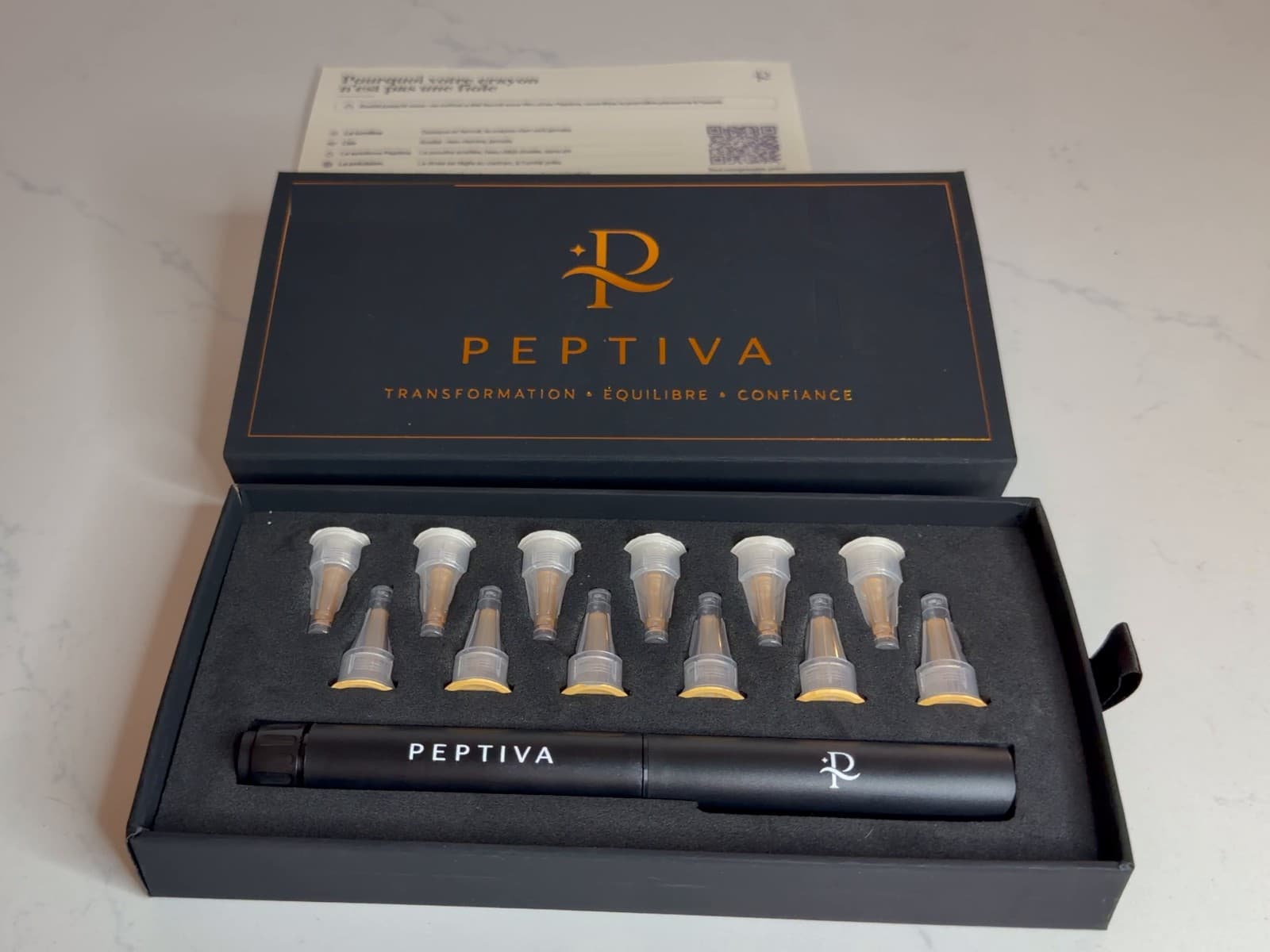
Technical sheet
- Family
- Central coenzyme of energy metabolism and cellular repair
- Half-life
- Short in the blood: NAD+ is continuously taken up and recycled by cells.
- Route
- Subcutaneous injection; the precursors (NR, NMN) are taken orally.
- Time to effect
- Energy and mental clarity reported in one to two weeks; the underlying effects (recovery, metabolism) over several weeks to months.
- Level of evidence
- Laboratory research : In humans: precursors taken by mouth (other molecules) and infusions; by injection under the skin, data are limited.
Chemical identity
- Chemical name
- β-Nicotinamide adénine dinucléotide
- Form
- Oxidized form (β-NAD+)
- CAS No.
- 53-84-9
Salt form: as stated on the lot's certificate of analysis.
Electron transport
NAD+ (nicotinamide adenine dinucleotide) carries the electrons removed from sugar and fat to the mitochondria: it captures them (becoming NADH), delivers them, then turns back into NAD+. Without it, ATP production slows down, even when sugar and fat are available.
The substrate of sirtuins, PARPs and CD38
NAD+ is also consumed by three families of enzymes: sirtuins (metabolism, inflammation, circadian clock), PARPs (DNA repair) and CD38, an immune enzyme whose activity increases with age.
Direct supply, without synthesis
Injection bypasses synthesis: the blood level rises quickly, then cells take it up and recycle it. Without it, the body manufactures its NAD+ from precursors (niacin, nicotinamide riboside, NMN), step by step.
Studied effects and observed timelines
Cellular energy: it carries the electrons used to make ATP
One to two weeks
Recovery after exercise: muscle ATP production depends on it
Two to four weeks
Cellular repair: PARPs, the enzymes that repair DNA, consume it
Several weeks to months
What you may feel
- Flushing, mild nausea, or cramping if given too quickly.
- Reaction at the injection site.
- Brief same-day fatigue for some users.
Stop and consult if
- Chest pain, palpitations, or faintness.
- Nausea or cramping that persists.
When to abstain
- Pregnancy or breastfeeding.
- Active cancer, or cancer currently being treated.
- Severe liver or kidney impairment.
- Unstable heart disease or uncontrolled high blood pressure.
- Minors.
The effects to watch for, and how to reduce them
This sheet is educational. It replaces neither a diagnosis nor follow-up: for any medical condition, pregnancy, breastfeeding or current medication, talk to a health professional.
In randomized trials in humans, NAD+ precursors have shown a safe rise in blood levels along with signals on insulin sensitivity and physical capacity: capsules (NR, NMN) carry the most clinical studies.
The kinetics of NAD+ given by intravenous infusion have been studied in humans; the benefits specific to injection under the skin rest on the mechanism and on user reports.
2018 · Martens et al., Nature Communications
Randomized crossover trial in middle-aged and older adults, oral nicotinamide riboside
About a 60% rise in blood NAD+ within six weeks, well tolerated, with a trend toward lower blood pressure among participants whose pressure was elevated.
2021 · Yoshino et al., Science
Randomized placebo-controlled trial in postmenopausal women with prediabetes, oral NMN
Improved muscle insulin sensitivity, comparable to what moderate weight loss provides.
2019 · Grant et al., Frontiers in Aging Neuroscience
Human volunteers, intravenous NAD+, repeated blood measurements
First description of the kinetics of directly administered NAD+ in humans, with good tolerability at a slow infusion rate.
Injected NAD+ or a precursor in capsule form?
Injection raises the level faster, without going through digestion. Precursor capsules (NR, NMN) suit ongoing use. Many people combine the two; the protocol provided with the product spells out the details.
Why does the level fall with age?
Synthesis slows down, and the enzyme CD38, more active with age and inflammation, consumes more of it. Sleep, exercise, and a niacin-rich diet support the level; direct supplementation adds to that.
Can you feel it?
Reports mostly describe more stable energy and clarity within one to two weeks. Cellular repair, on the other hand, isn't something you feel.
Glossary (5)
- Coenzyme
- A molecule that helps an enzyme function, without being a protein itself.
- Sirtuins
- A family of enzymes that regulate metabolism, inflammation, and aging, and that consume NAD+.
- PARP
- DNA repair enzymes that consume large amounts of NAD+ after damage occurs.
- CD38
- An immune enzyme that breaks down NAD+; its activity increases with age.
- Precursor
- A molecule from which the body manufactures another molecule (here, NAD+).