
Healing Blend
Combined recovery formula: BPC-157 and TB-500
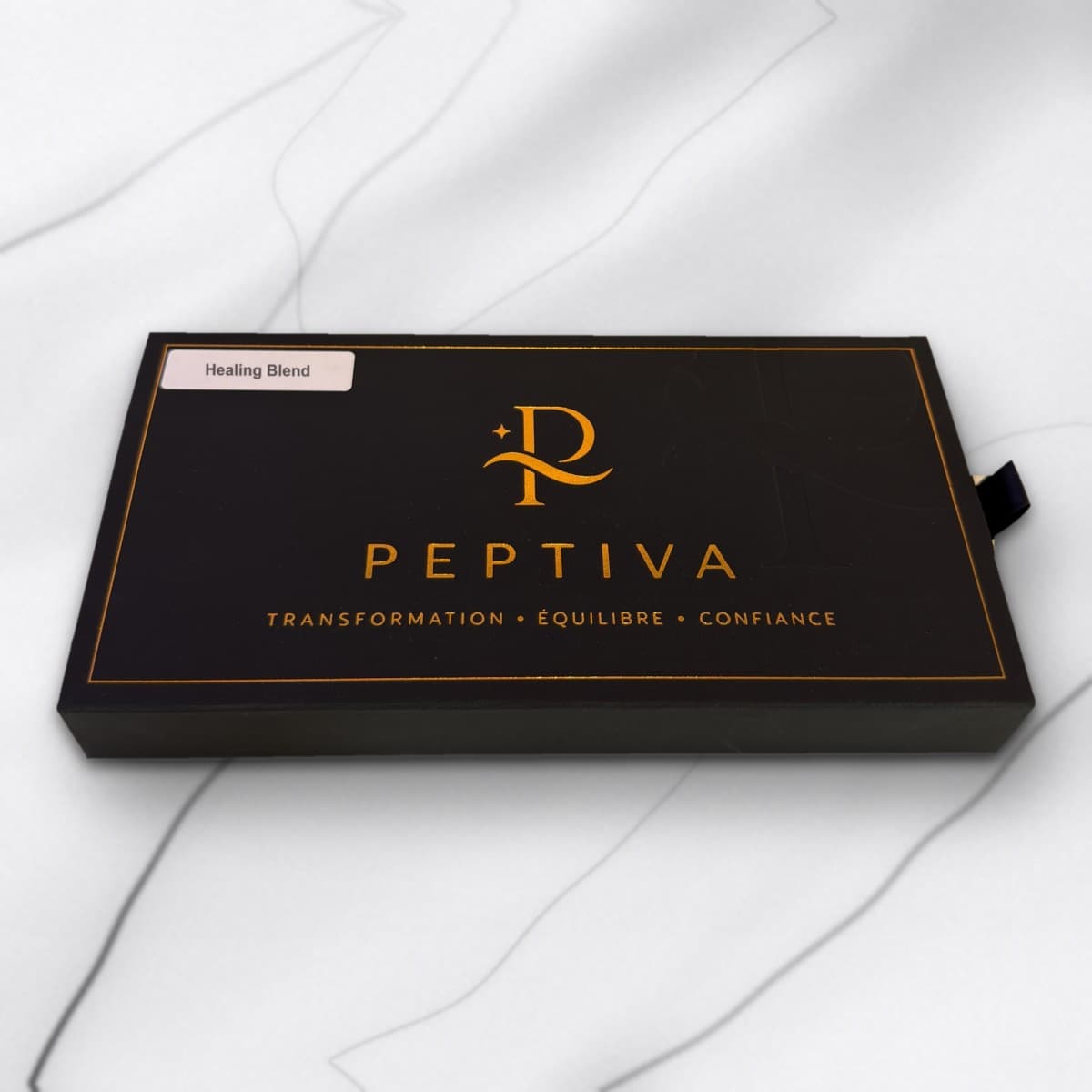
Two repair peptides in one pen: BPC-157, with 544 articles published since 1993, and TB-500, the active fragment of thymosin beta-4, which sped up the regrowth of skin over a wound by up to 61% on day 7 (Malinda, 1999).
BPC-157 stimulates blood vessel formation through the VEGF pathway and the migration of fibroblasts, which make collagen. TB-500 binds actin, the protein that lets cells migrate, and limits fibrosis.
It is studied for tendons, muscles and joints: a 2019 review reports favorable results for BPC-157 on their repair, and TB-500's parent protein has been tested in phase 3 in humans for corneal healing.
- Half-life
- Short for both; the effect on repair lasts well beyond their presence in the blood.
- Route
- Subcutaneous injection, a single pen, often near the affected area.
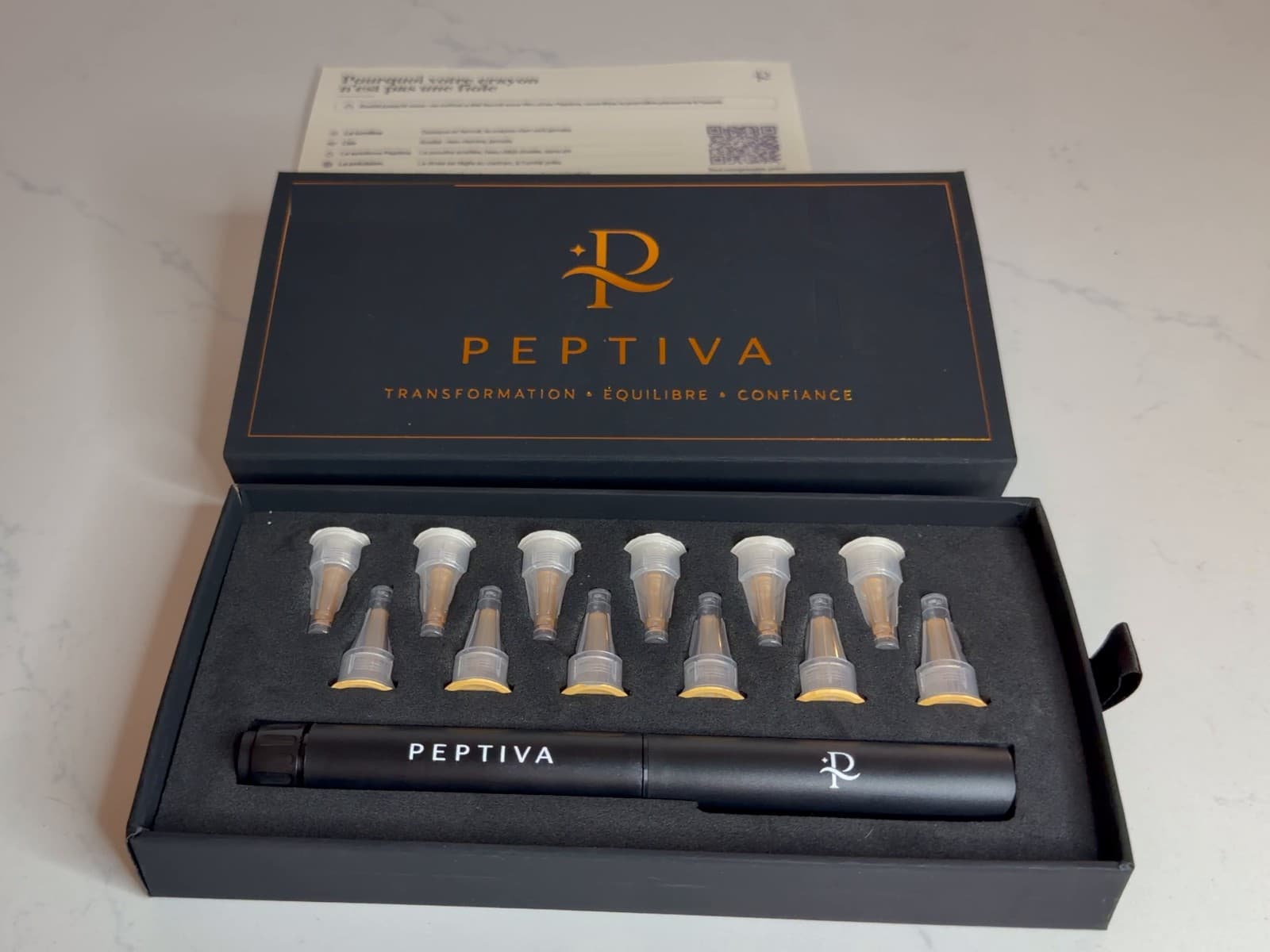
Technical sheet
- Family
- Combined recovery formula: BPC-157 and TB-500
- Half-life
- Short for both; the effect on repair lasts well beyond their presence in the blood.
- Route
- Subcutaneous injection, a single pen, often near the affected area.
- Time to effect
- Flexibility and comfort within two to four weeks, according to users; in the laboratory, tendon repair within a few days to a few weeks.
- Level of evidence
- Laboratory research
Chemical identity
BPC-157
- Form
- Synthetic peptide, values for the base form
- CAS No.
- 137525-51-0
TB-500
- Form
- Acetylated fragment 17-23 of thymosin beta-4 (Ac-LKKTETQ), values for the base form
Salt form: as stated on the lot's certificate of analysis.
The stages of repair it targets
Tissue repair goes through blood vessel formation (angiogenesis), the arrival of the fibroblasts that make collagen, then the control of fibrosis. BPC-157 is chosen for the first two steps (angiogenesis, fibroblasts, collagen), TB-500 for the third, by reducing inflammation and fibrosis.
Local and systemic
BPC-157 acts mostly near the injury. TB-500 helps repair cells move throughout the body, wherever the injection site.
The digestive lining
BPC-157 comes from a protein in gastric juice, and it was first studied against stomach damage caused by anti-inflammatories, often taken after an injury.
Studied effects and observed timelines
Recovery of a tendon, muscle or joint: favorable results for BPC-157 in the 2019 review
In the laboratory: within a few days to a few weeks
Tissue suppleness: thymosin beta-4 limits fibrosis, the rigid scar tissue
According to users: two to four weeks
Digestive lining: BPC-157 comes from a protein in gastric juice
In the laboratory: within a few days to a few weeks
What you may feel
- Reaction at the injection site.
- Brief fatigue or mild headaches in the first few days (TB-500).
- Mild nausea or dizziness reported by some users (BPC-157).
Stop and consult if
- Pain that increases instead of decreasing in the injured area.
- Intense fatigue that persists beyond a few days.
When to abstain
- Active cancer or a recent history of it.
- Pregnancy or breastfeeding.
- A serious injury that hasn't been evaluated: get a diagnosis first.
- Minors.
Anti-doping : Both components are prohibited by the World Anti-Doping Agency (S0 and S2).
The effects to watch for, and how to reduce them
This sheet is educational. It replaces neither a diagnosis nor follow-up: for any medical condition, pregnancy, breastfeeding or current medication, talk to a health professional.
- BPC-157The first component, available on its own.
- TB-500The second component, available on its own.
- GHK-CuTo add collagen and skin to the repair work: that's Glow Blend.
To avoid
- Long-term anti-inflammatories without medical advice: they slow down the very repair this protocol supports.
Each component has its own basis (see the BPC-157 and TB-500 entries): tendons, muscle, and the gut lining for BPC-157; cell migration, wound healing, and heart protection for thymosin beta-4. No trial has tested the combination: it rests on the complementarity of their mechanisms.
2011 · Chang et al., Journal of Applied Physiology
Tendon cells (fibroblasts) and tendon fragments in culture
BPC-157 speeds up the outgrowth of cells from tendon fragments, their survival under oxidative stress and their migration, through the FAK-paxillin pathway.
2004 · Bock-Marquette et al., Nature
Experimental model of myocardial infarction
Thymosin beta-4 promotes cell survival and the repair of cardiac muscle via cell migration.
2019 · Gwyer et al., Cell and Tissue Research
A critical review of studies on musculoskeletal repair
Favourable results for BPC-157 on the repair of tendons, ligaments, and muscles across the studies reviewed, most of them done in the laboratory.
Healing Blend, or the two separate pens?
The blend delivers both peptides in one injection. Separate pens let you adjust the amount of each component.
Where should you inject?
Many people choose a site near the injury, for BPC-157's local action; TB-500 acts everywhere. The protocol provided with the product specifies the technique.
What about athletes?
Both components are prohibited by the World Anti-Doping Agency. An athlete subject to testing should check with their federation.
Glossary (5)
- Angiogenesis
- The formation of new blood vessels toward a tissue that's repairing.
- Fibroblast
- A cell that manufactures collagen and rebuilds tissue.
- Fibrosis
- Stiff scar tissue that replaces functional tissue when repair is disorganized.
- Systemic
- Acting throughout the whole body.
- Complete protocol
- A formula that brings several complementary peptides together in a single pen.