
Understanding the real difference between a pen and a vial
Not a matter of comfort: it's keeping the peptide intact down to the last dose.
1. Light and air
The vial
Clear glass, stopper pierced at every dose: thirty times a month, the peptide is exposed to light and air.
The Peptiva pen
Opaque and closed, with a single puncture, at preparation. The peptide never comes into contact with air.
2. The Peptiva system
The vial
Water bought separately, of a source nobody checks, sometimes with no preservative at all, and a volume you measure yourself.
The Peptiva pen
The powder is sealed in the pen. Our bacteriostatic water, at optimal pH and with benzyl alcohol, is calibrated to the exact volume for your format, in an air-free syringe. Nothing to measure, no water to buy separately.
3. Precision
The vial
A dilution to calculate, units read by eye: one misplaced decimal, and it's ten times the dose.
The Peptiva pen
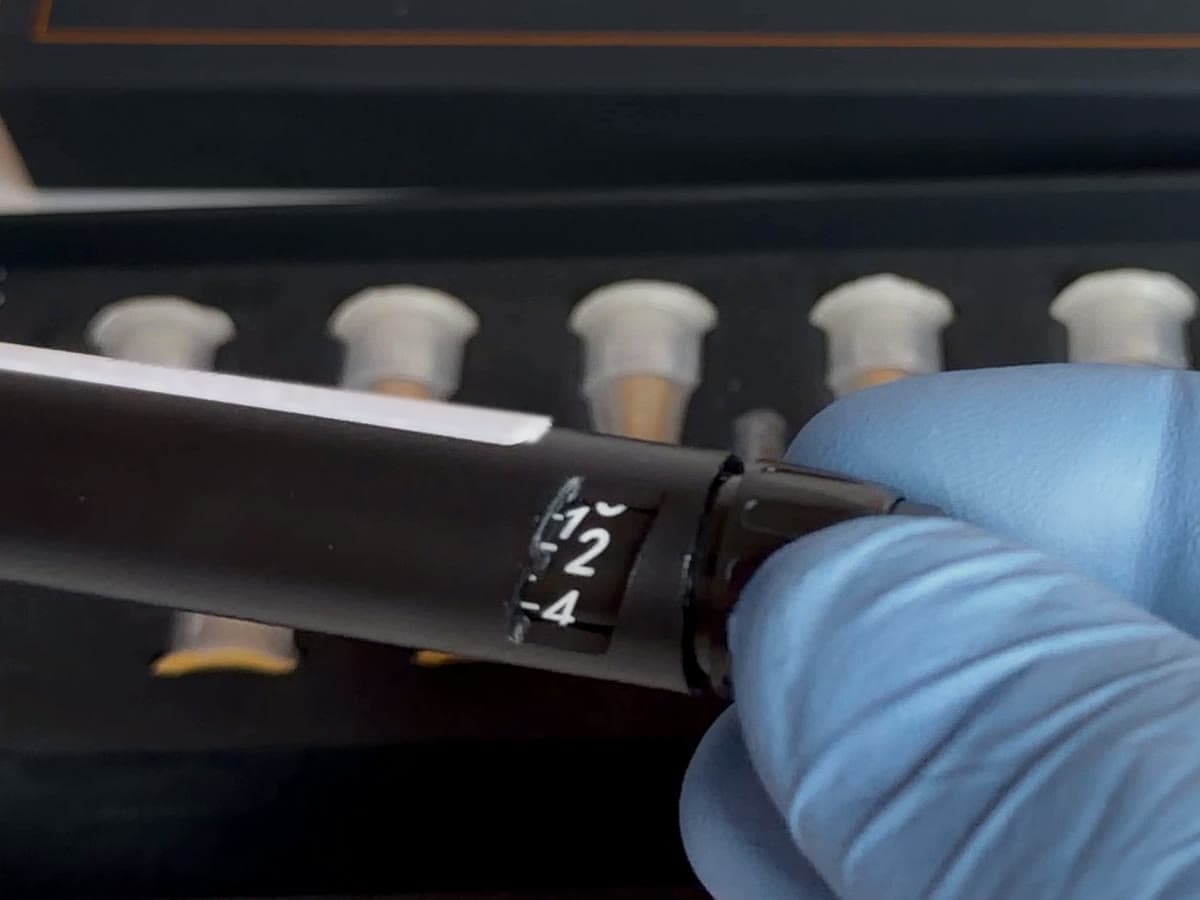
The concentration is set by Peptiva: the dose is set on the dial, to the unit, just like an insulin pen. What the dial shows is what you get.
4. Comfort
The vial
A syringe and a longer needle.
The Peptiva pen
A fine, short needle tip. You set the speed: a slow injection, at your own pace.
5. Ready in one step, nothing to calculate
The vial
The price shown is the price of the powder. The water, syringes, needles and swabs are bought separately, and the dilution is left for you to work out.
The Peptiva pen
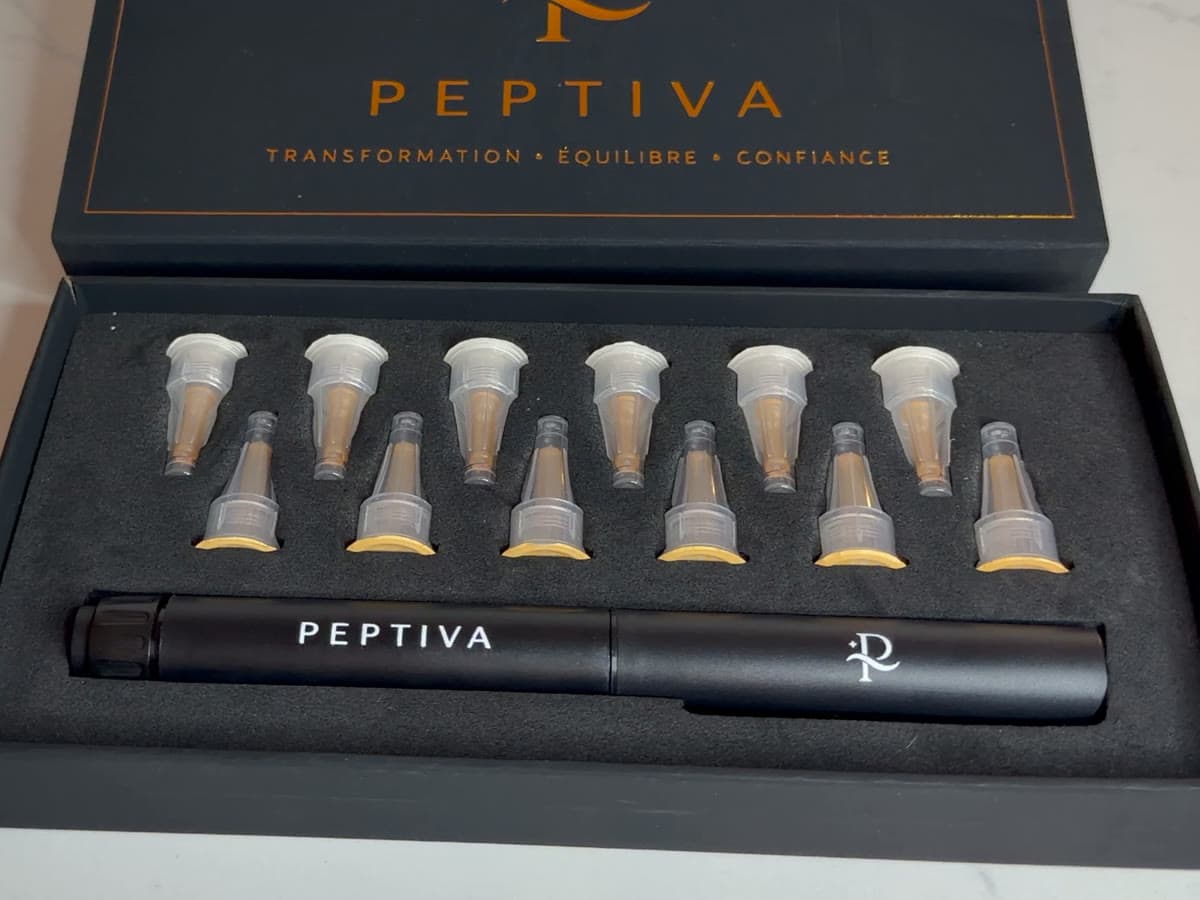
In the box: the pen, its pre-measured water syringe, twelve needle tips (a new one for each injection) and the alcohol swabs. The protocol is written in dial units.
Why not sell vials, for less?
Because it would not be the same product. A vial is a powder where everything else falls on you: the water, the dilution, the measuring.