
Semax
Heptapeptide derived from an ACTH fragment, without hormonal activity
Approved in Russia since the 1990s, Semax has been on the Russian list of essential medicines since 2011, and it is used there in clinical practice, notably for recovery after a stroke.
It is a heptapeptide taken from ACTH (amino acids 4 to 7), extended by the Pro-Gly-Pro tripeptide, which protects it from enzymes: it keeps the hormone's action on attention, without stimulating cortisol.
It is studied for focus and working memory: it increases the expression of BDNF and its receptor TrkB in the hippocampus (Dolotov, 2006), and in 110 patients in rehabilitation after a stroke, blood BDNF rose (Gusev, 2018).
- Half-life
- Very short in the blood (minutes); the effect on genes lasts hours and the felt effect builds over days.
- Route
- Intranasal in the original studies; the subcutaneous route is also used.
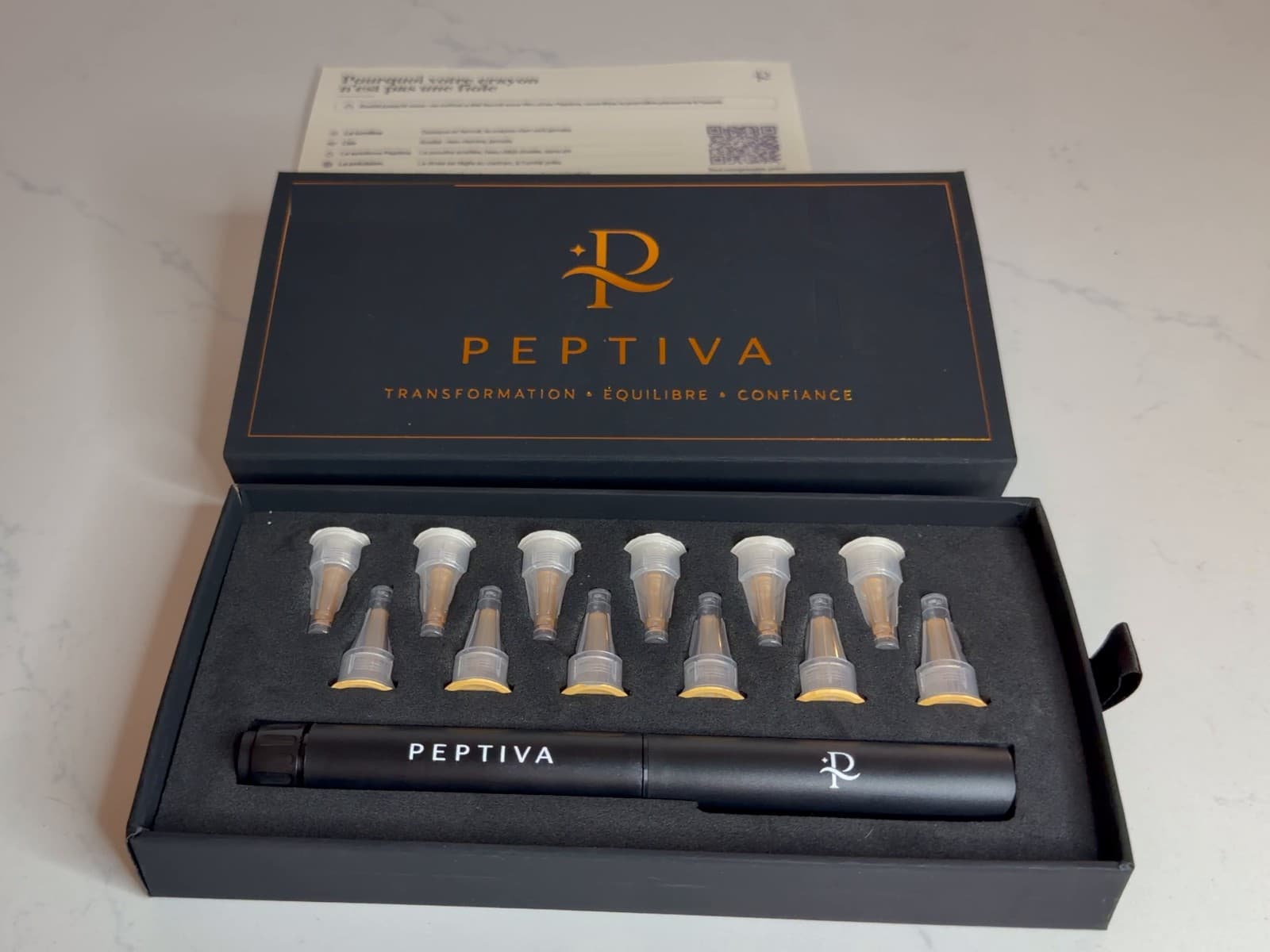
Technical sheet
- Family
- Heptapeptide derived from an ACTH fragment, without hormonal activity
- Half-life
- Very short in the blood (minutes); the effect on genes lasts hours and the felt effect builds over days.
- Route
- Intranasal in the original studies; the subcutaneous route is also used.
- Time to effect
- Clarity and focus reported the same day or within a few days; memory and nerve recovery over several weeks.
- Level of evidence
- Laboratory research : In humans: Russian clinical trials, given through the nose; by injection, data are limited.
Chemical identity
- Form
- Synthetic peptide, values for the base form
- CAS No.
- 80714-61-0
Salt form: as stated on the lot's certificate of analysis.
An ACTH fragment without hormonal activity
The 4-10 region of ACTH acts on attention and learning, independently of its hormonal effect. Semax takes its amino acids 4 through 7 and adds the tripeptide Pro-Gly-Pro, which protects it from enzymes. It keeps the action on the brain without stimulating cortisol.
BDNF and the TrkB receptor
BDNF helps neurons survive and form new connections, especially in the hippocampus. Semax increases the expression of BDNF and its receptor, TrkB: this is its best-documented mechanism, the one that links it to brain plasticity and nerve recovery.
Dopamine, serotonin, and enkephalins
It also modulates the turnover of dopamine and serotonin in certain brain regions, hence the effect on motivation and mood reported in the studies. Finally, it slows the breakdown of enkephalins, linked to calm and stress resilience.
Studied effects and observed timelines
Focus: it modulates dopamine and serotonin turnover
Days
Working memory: it increases BDNF in the hippocampus, the memory region
Weeks
Stress resistance: it slows the breakdown of enkephalins
One to three weeks
What you may feel
- Nasal irritation with intranasal use; local reaction with injection.
- Agitation, jitteriness, or trouble falling asleep if taken late in the day.
- Mild headaches.
Stop and consult if
- Marked anxiety, unusual agitation.
- Any new neurological symptom (vision, balance, speech).
When to abstain
- Pregnancy or breastfeeding.
- A diagnosed psychiatric disorder (bipolar disorder, psychosis) without medical follow-up.
- Uncontrolled epilepsy.
- Minors.
The effects to watch for, and how to reduce them
This sheet is educational. It replaces neither a diagnosis nor follow-up: for any medical condition, pregnancy, breastfeeding or current medication, talk to a health professional.
To avoid
- Strong stimulants (high doses of caffeine, decongestants): jitteriness that adds up.
Numerous studies on the mechanism (BDNF) and Russian clinical trials on recovery after stroke, optic nerve damage, and attention. Approved in Russia since the 1990s, Semax has a long track record of use. These trials gave it through the nose; by injection, human data are limited.
2006 · Dolotov et al., Brain Research
Gene expression in the hippocampus (experimental model)
Rapid increase in the expression of BDNF and its receptor TrkB after Semax administration: the mechanistic basis of the peptide.
2008 · Gusev et al., Russian trials
Patients after ischemic stroke, intranasal Semax added to standard treatment
Neurological recovery reported as better in the Semax group.
2014 · Medvedeva et al., Frontiers in Neuroscience
Analysis of the expression of hundreds of genes after ischemia (experimental model)
Semax alters the activity of genes linked to inflammation and neuroprotection, in a direction favourable to recovery.
Is it a stimulant like coffee?
No. It acts neither on adenosine like caffeine, nor on a massive dopamine release like amphetamines, but through BDNF and fine-tuned modulation of neurotransmitters. No “crash” or tolerance has been described.
Where does Semax come from?
From the Institute of Molecular Genetics in Moscow. It has been approved in Russia since the 1990s.
What has been measured in the brain?
In the lab, a single dose tripled BDNF messenger RNA in the hippocampus, the memory region, and raised the activation of TrkB, its receptor, 1.6-fold (Dolotov, 2006). In 110 patients in rehabilitation after a stroke, blood BDNF rose (Gusev, 2018).
Glossary (5)
- ACTH
- A pituitary hormone that commands cortisol production; Semax is derived from it without keeping its hormonal effect.
- BDNF
- Brain-derived neurotrophic factor: the protein that maintains neurons and their connections.
- Hippocampus
- A brain region central to memory and learning.
- Enkephalins
- Small peptides produced by the brain, involved in calm and pain modulation.
- Brain plasticity
- The brain's ability to create and strengthen connections throughout life.